One work.
One recipient.
An independent house of haute horlogerie. Twelve unique works a year, each made for one person.

Thank you for your interest. Access to a SILENS piece is reserved for selected members.
An independent house of haute horlogerie. Twelve unique works a year, each made for one person.
SILENS does not run a shop. It keeps a house, and once a year opens its door to a few: twenty-four people are invited to take part, alone and in silence, in a sealed-bid auction. Invitations are extended by the House.
Nine moments, always in the same order. Most of them happen where no one sees.
How the House opens its door, and what it keeps behind it.
No one applies to SILENS. The House invites.
A small circle of Curators, appointed by the House, may propose people they believe suited to it. A Curator does not invite. The House alone considers each name, and alone chooses the twenty-four guests of a vintage. Its reasons are not published.
Those chosen are introduced in person by the Curator who proposed them, and receive a letter closed with the seal of the House. It is less an invitation than a summons.
There is no application, no waiting list and no register of interest. An invitation cannot be requested, and it cannot be bought. Nor does having received a work confer the right to propose others.
Each guest decides alone. Every offer is sealed.
There is no auction room. No one gathers, no one watches, and no price is called aloud. Each guest is free to make an offer or not, and makes it in solitude: by private sealed correspondence, or in an encounter the House arranges for that guest alone.
A guest may make one offer, for one work. No one sees another’s offer, and no one learns who else was invited.
When the offers are opened, the twelve highest valid offers are chosen, and their authors are told privately. Once the offers are received, their order is not altered.
The other twelve are not chosen, and they are not invited again. An invitation to SILENS is offered once. It is never a standing privilege.
Nothing is ever made known: not the names of guests or recipients, not the offers, not the amounts, not the order.
The particulars of each auction, including eligibility, reserve, currency and procedure, are communicated privately to each guest and governed by terms set apart from these pages.
Twelve works a year. Each one for one person.
What a guest seeks is not a watch on a shelf. It is the right to a commission: one work, conceived within the world of the House and completed for the person who will receive it.
No finished piece is shown before an offer is made. A guest may be shown where the House is looking, in a painting, an architectural detail or an old motif, but the work itself stays unseen until its recipient is chosen. The Museum shows how such origins become pieces. It is not a catalogue.
Each work is conceived and made for its recipient alone. In private conversation, the recipient may offer something of their own to inspire it. The design, its proportions, its materials and its execution remain for the House to decide.
The twelve are made apart from one another. They are neither an edition nor a series, and none is repeated. When they are complete, they are presented at a private gathering. By then the auction is long over.
Each vintage, the House makes thirteen works. Only twelve leave.
The thirteenth is XIII. It belongs to its vintage and to no one else. It is never offered: not for purchase, not at auction, not as a commission.
XIII is kept from public view. At the discretion of the House, it may be shown privately to the twelve recipients of its year. Then it returns to the archive, where it remains as the witness of that year’s work.
A House that gives twelve works to the world keeps one, to remember what it made.
The House asks little, and asks it of everyone: discretion.
A guest is expected to keep private what was entrusted privately: the invitation, the correspondence, the offer, and the names of the others who took part. To accept an invitation is to accept the rules of the House.
At SILENS, “private” covers three things: who was invited, who received a work, and what was offered. The works themselves may be shown, in paintings, studies and photographs, but never with the name of the person they were made for.
Any formal undertaking on confidentiality, ownership or resale is agreed separately with each recipient, in terms of its own.
A work leaves the House. It does not leave its history.
The relationship between the House, a work and the person who received it does not end at the presentation. SILENS keeps a private archive of every creation: its vintage, its origin, its identity and its first recipient. The archive is not a public register of owners, and the names in it are never disclosed.
Each finished work is accompanied by a document of its authenticity and provenance. Over time, the House may offer the care, servicing and documentation a work requires.
The seal of SILENS is a lacería, a single line that seems to have no beginning and no end. Each work is its own, and all of them belong to the same story.
Care, servicing and documentation are offered under terms established separately.
In Latin, silens is the one who keeps silent.
Its seal is a lacería, the Andalusian geometry of interlaced bands: a single line with no beginning and no end.
SILENS does not seek customers. It chooses whom to invite.
Enter The MuseumEvery creation of the House begins in a painting. Four rooms, four works, four details. Look at each painting whole, come closer to the detail it keeps, and see the piece that was born of it.
Move over a painting to approach its detail. Click to reveal the piece.Tap a painting to approach its detail. Tap again to reveal the piece.
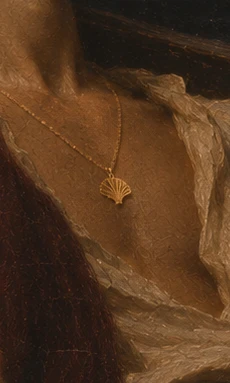
The detail: the shell at his throat.
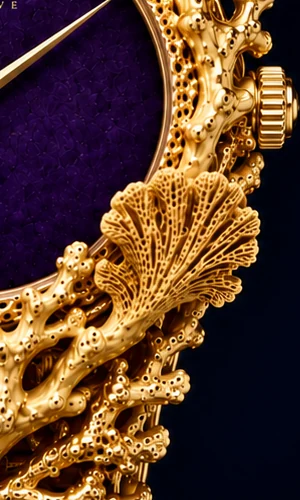
A sailor sleeps under the moon, a gold shell on a fine chain at his throat. The same shell returns in CORAL, settled among branches of golden coral.
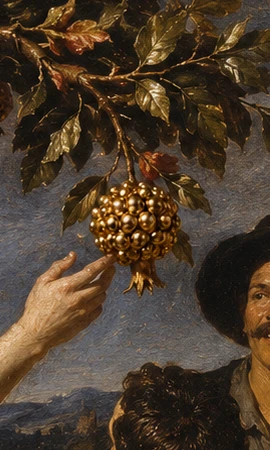
The detail: the fruit of golden spheres.
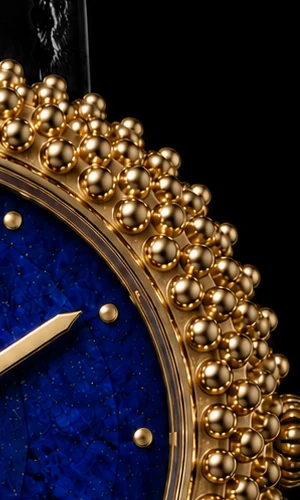
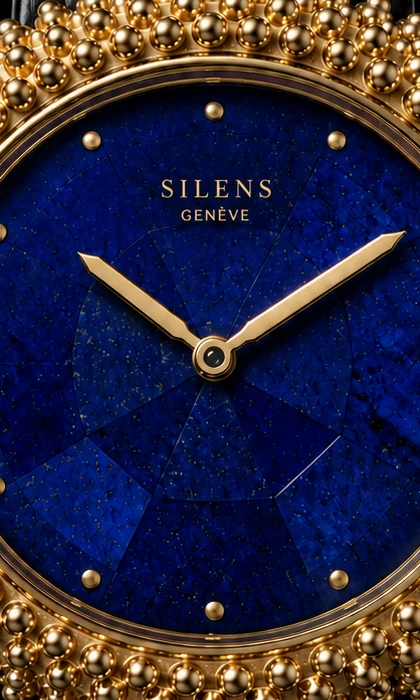
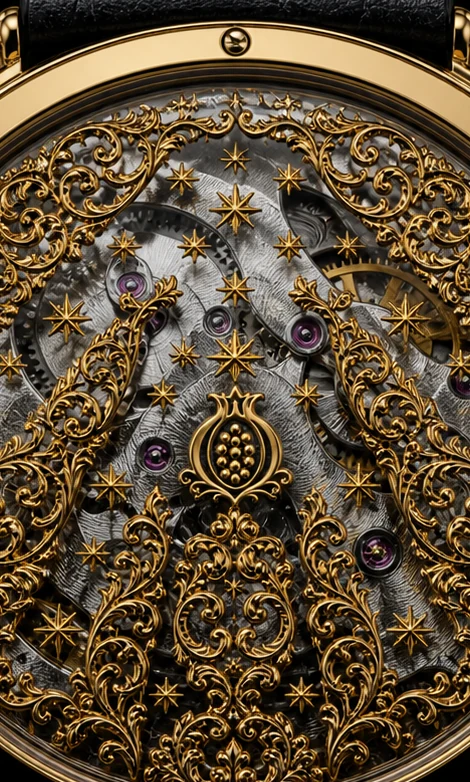
Beneath a pomegranate tree, a young god reaches for a fruit made of golden spheres. The spheres crown the case of GRANADA, set close like seeds.
The detail: the earring of gold and blue stones.
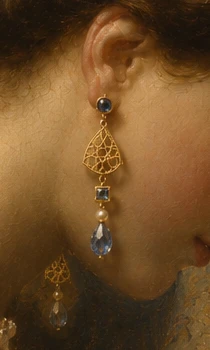
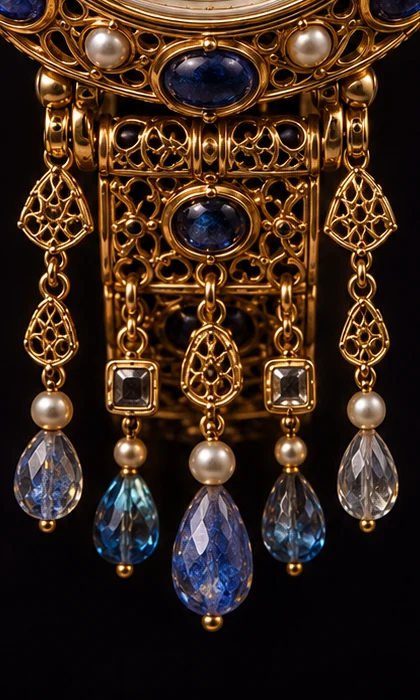
A noblewoman bows in prayer, crowned and still. From her ear hangs gold filigree with blue stones and a pearl; the same pendants move from the bracelet of CORONA REGIA.
The detail: the rose window.
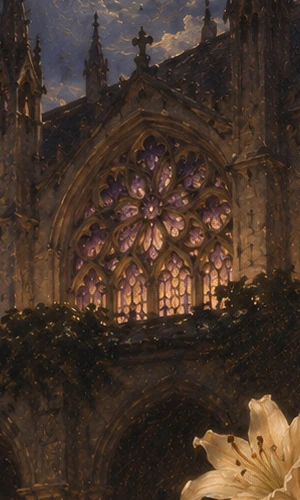
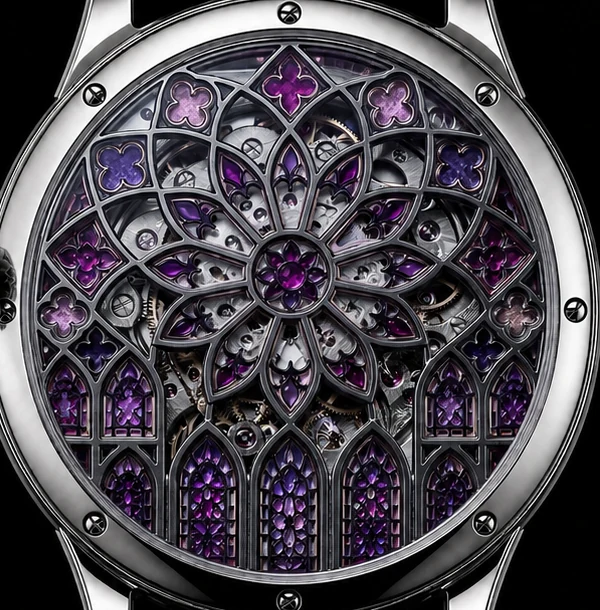
A lady looks up at a cathedral under the moon, its rose window lit from within. Turn AURORA over and the same window rises above the movement.
The paintings and creations shown belong to the world of the House. The creations are concepts, not pieces that have been made.
Compare the four transitions. Each one begins at the painting, as a visitor would find it.
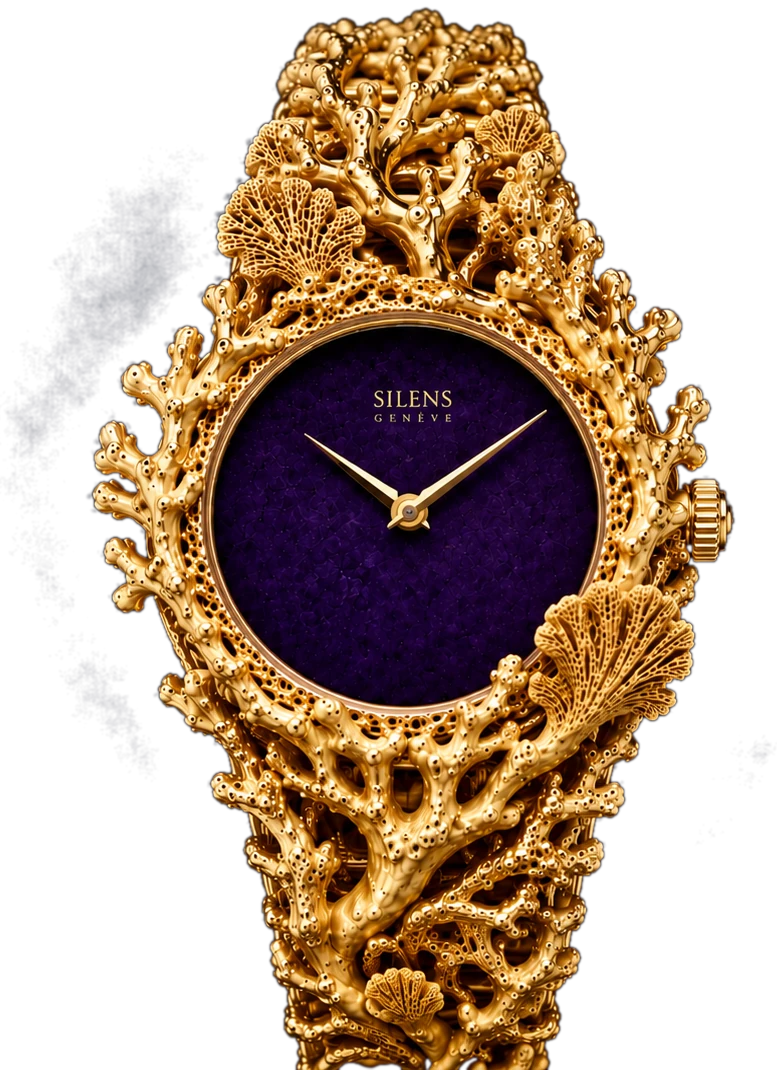
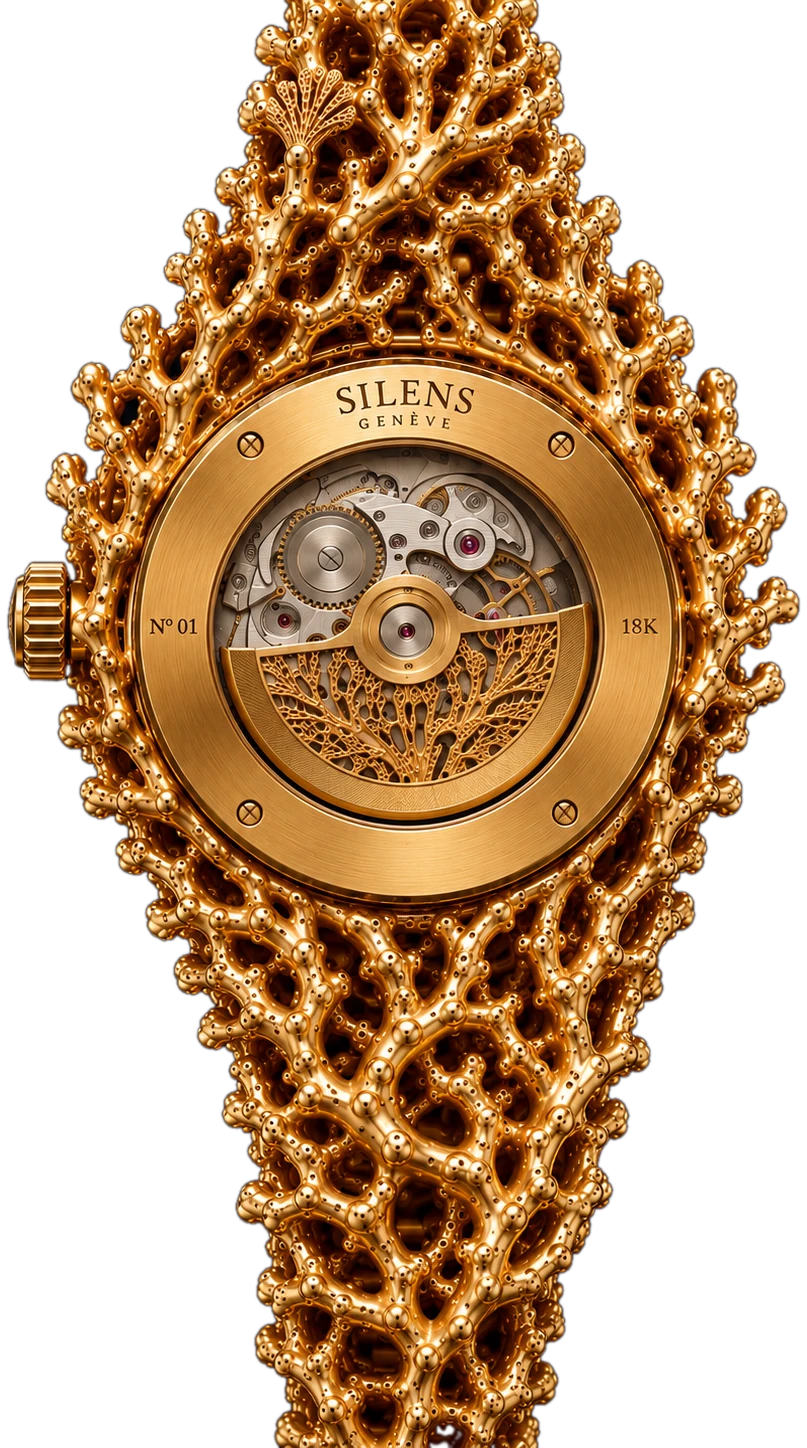
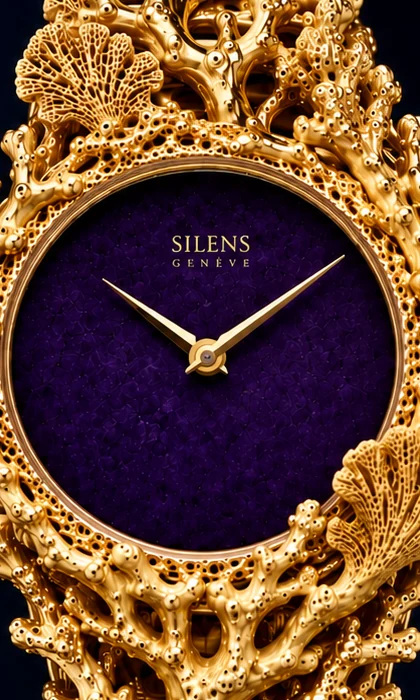
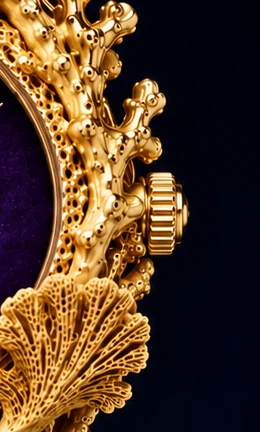
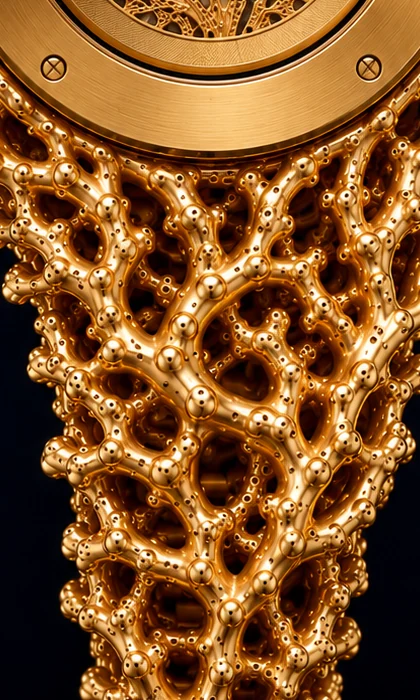
A golden reef grows around a violet dial. Case and bracelet are one living form; shells rest among its branches.
The shell at his throat, in Nocturne with a Sleeping Sailor, and what became of it in CORAL.
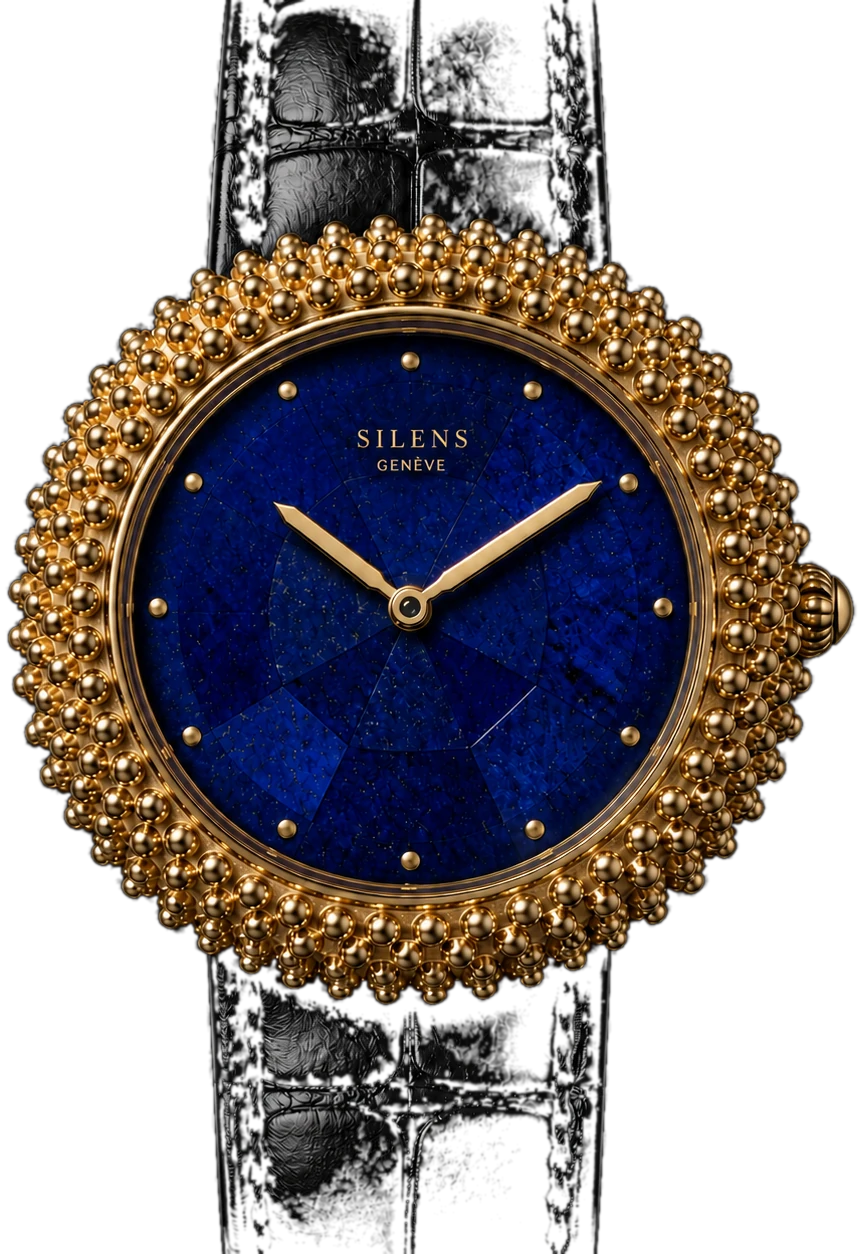
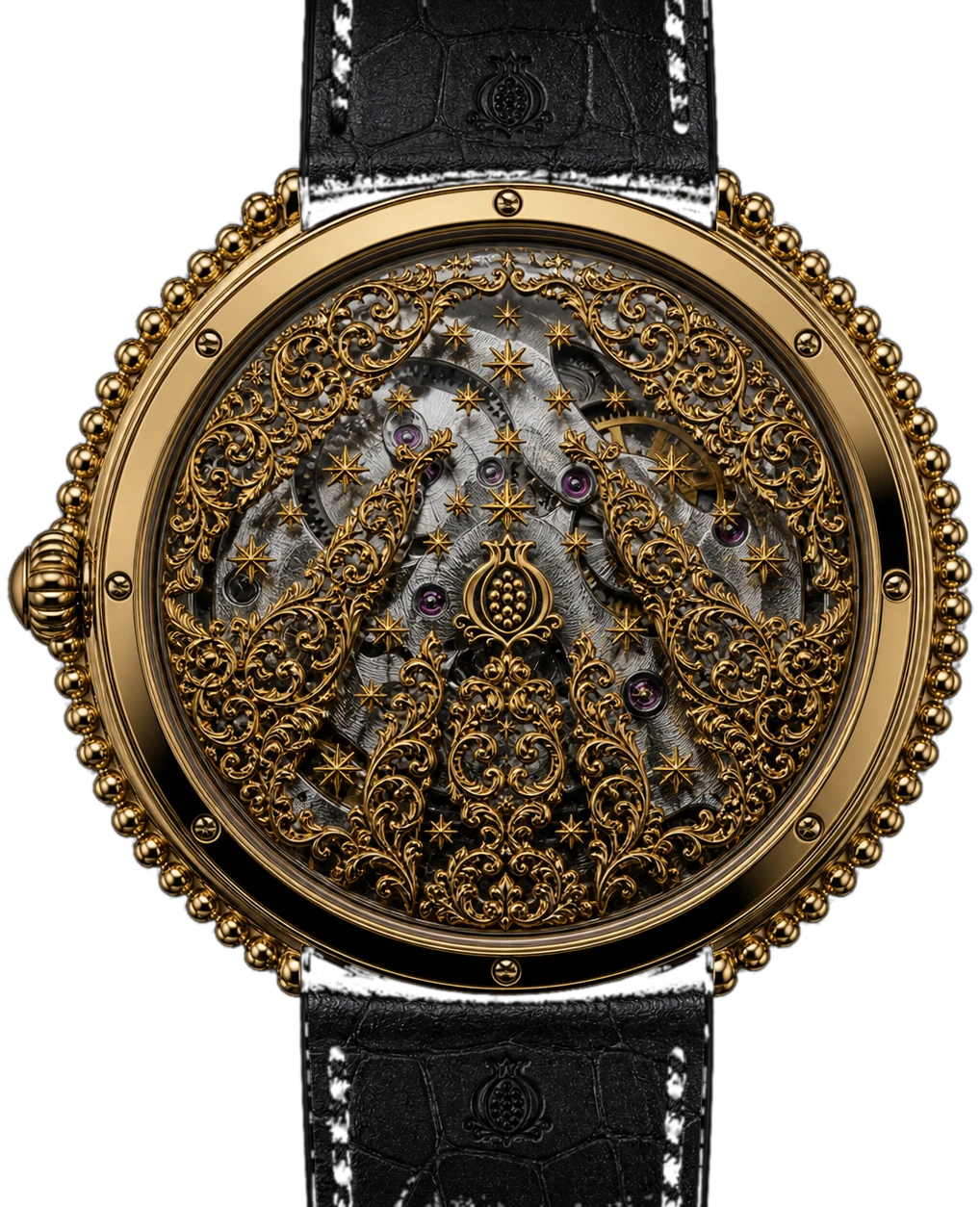
Small golden spheres crown the case like the seeds of a pomegranate. The dial is deep blue lapis; the fruit returns on the back, among filigree and stars.
The fruit of golden spheres, in The Offering of the Golden Fruit, and what became of it in GRANADA.
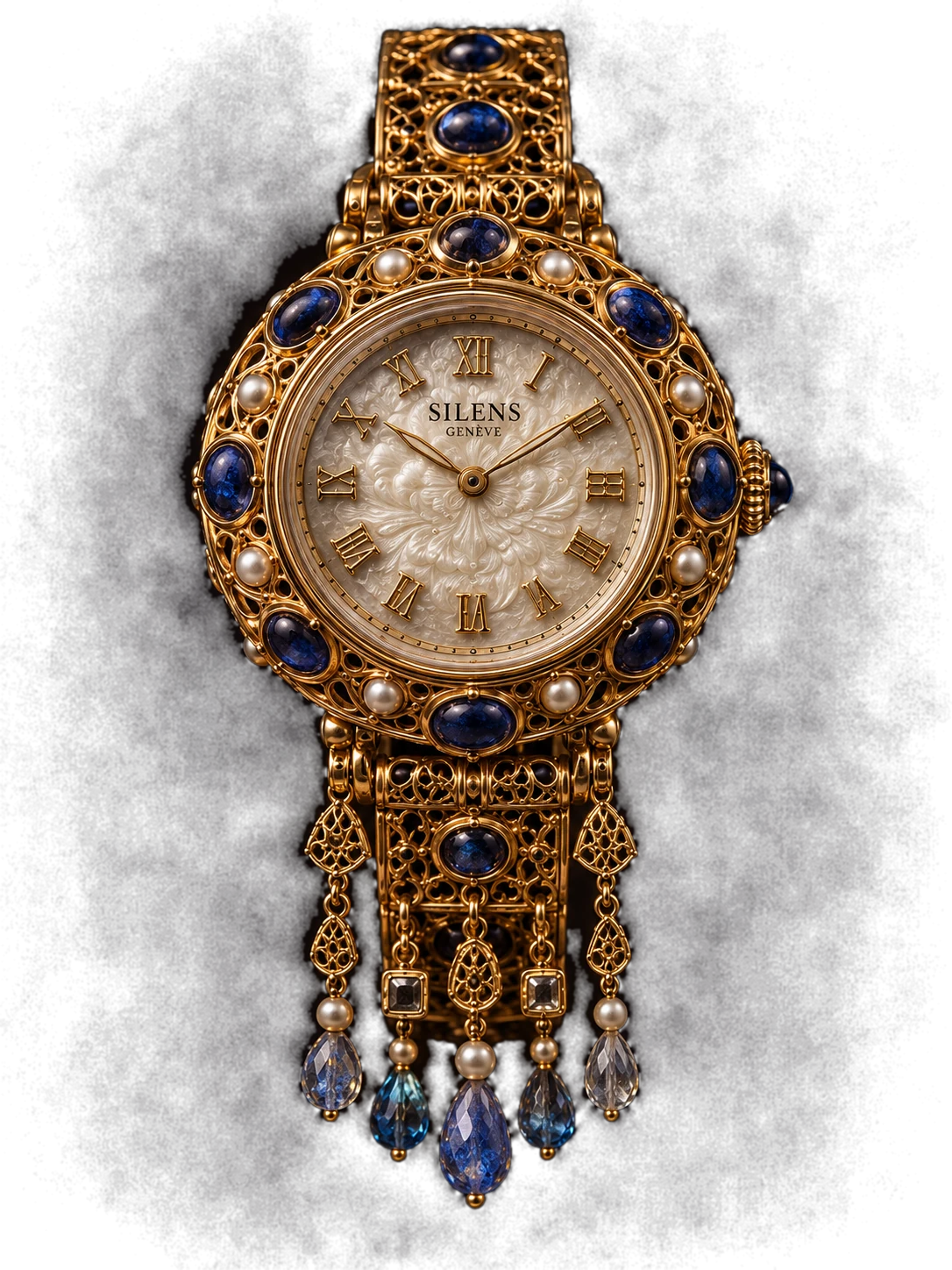
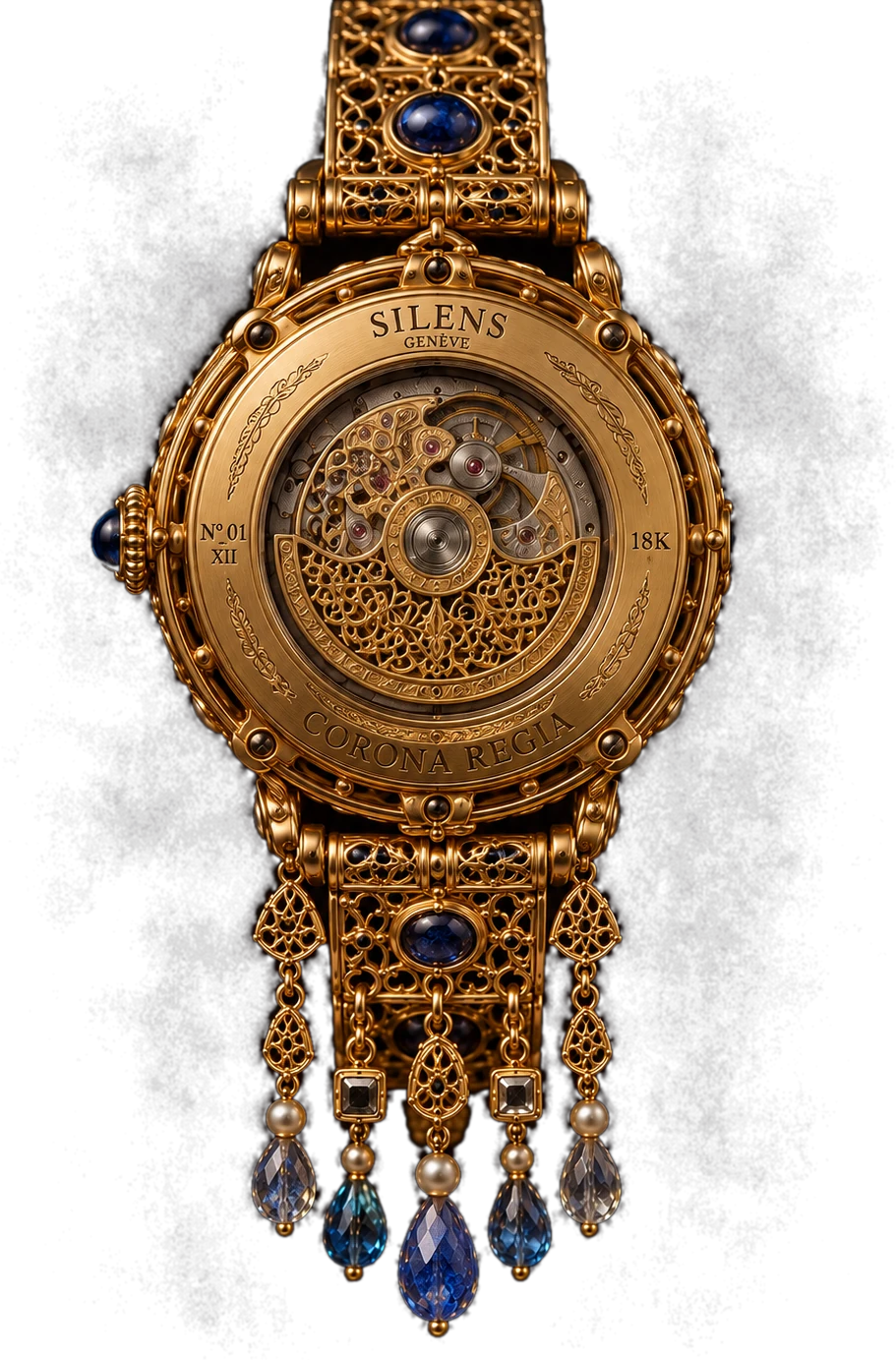
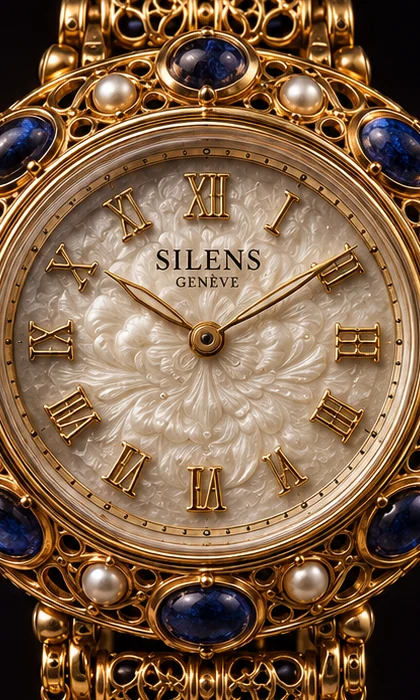
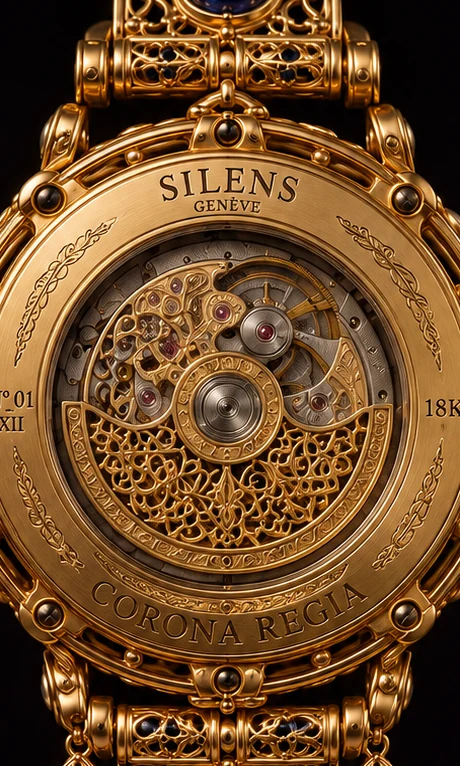
Court jewellery, reimagined around a carved mother-of-pearl dial. Small stones hang from the bracelet and move with the wrist.
The earring of gold and blue stones, in A Noblewoman at Prayer, and what became of it in CORONA REGIA.
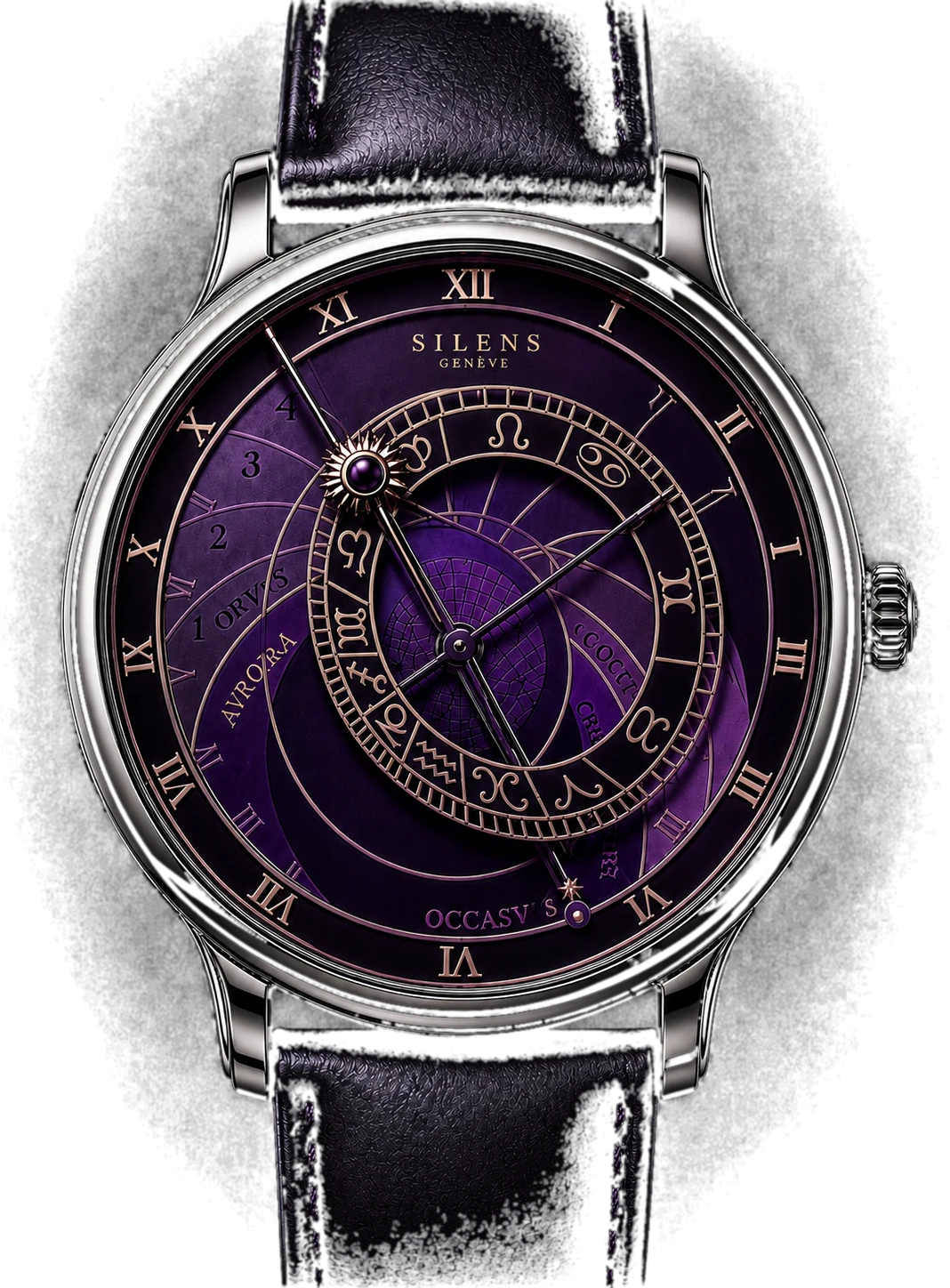
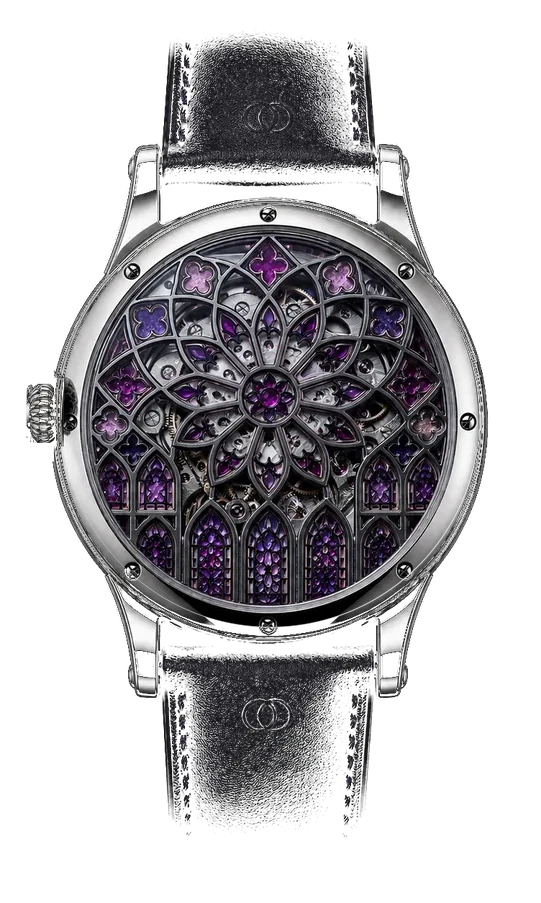
A violet astronomical dial with the zodiac and Roman numerals. Turn it over and the back is a Gothic rose window above the movement.
The rose window, in The Lady and the Cathedral, and what became of it in AURORA.


El arco del umbral es el módulo de toda la web. Cada sala se ordena sobre un eje central y cada imagen vive dentro de una hornacina.
Volver a la CasaUn fondo. Noche en toda la web. No hay bandas de color ni fondos por sección; la única variación es la piedra del interior de las hornacinas.
Un contenedor. La hornacina de proporción 3:5, con arco de medio punto. Las imágenes nunca van a sangre, ni inclinadas, ni detrás de un texto.
Una composición. El eje central. Dos formas: el retablo (una hornacina y dos alas de texto) y la arcada (varias hornacinas sobre la misma imposta).
Una acción. Texto con un trazo que se dibuja. Una sola acción principal por sala, en oro; el resto en marfil.
Una navegación. Sobre el eje: el sello con el nombre en el centro y los enlaces repartidos a ambos lados, como en el umbral.
Un movimiento. La luz llega: cada sala aparece y sus hornacinas se encienden de una en una, como los arcos al entrar.
Newsreader, una sola familia. La inscripción, en mayúsculas espaciadas, es la voz de la Casa: el nombre SILENS, los nombres de las obras y los conceptos. Nunca se usa para adornar.